
In trade negotiations, as in chess, sometimes you need to accept a temporary disadvantage to secure a better long-term position, points out Sonal Varma, chief economist (India and Asia ex-Japan) at Nomura.

From the 30-share pack, Adani Port, Bharti Airtel, Asian Paints, IndusInd Bank, Bajaj Finserv, Reliance Industries, Infosys, UltraTech Cement, HDFC Bank, HCL Technologies and ICICI Bank were among the laggards. Tata Motors, Axis Bank, Maruti, Larsen & Toubro, ITC and Tata Steel were among the gainers.

Equities went into a tailspin on Wednesday after the Reserve Bank surprised the market with a mid-cycle rate hike in a bid to tame soaring inflation.

In a late Tuesday evening development, RBI raised the repo rate, or the rate at which it lends to banks, by 50 basis points to 8.50 per cent. The cash reserve ratio, or the proportion of deposits kept with the central bank, will be increased by 50 basis points to 8.75 per cent.
The Reserve Bank of India (RBI) unexpectedly kept the country's policy interest rate on hold on Wednesday, despite calling current inflation too high, citing the prospect of easing retail prices and its concerns about the weak domestic economy.

In a bid to support revival of sectors hit most by the Covid-19 pandemic, Reserve Bank of India on Friday decided to open a separate liquidity window of Rs 15,000 crore for certain contact-intensive sectors like hotels and restaurants, tourism and aviation ancillary services.
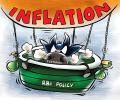
The RBI's Monetary Policy Committee brainstormed the impact of any future shocks on the inflation trajectory and stressed monitoring the cumulative effect of monetary policy actions over the past one year, which is still unfolding, revealed minutes of the rate-setting panel released on Thursday. The minutes of the meeting of the Monetary Policy Committee (MPC), headed by Reserve Bank Governor Shaktikanta Das, also indicated it would be premature to declare an end to the monetary tightening cycle, which started in May 2022 to check high inflation following the outbreak of the Russia-Ukraine war. The central bank, which effected six back-to-back hikes in the key short-term lending rate (repo) since May 2022 to check high inflation, decided to take a pause early this month.
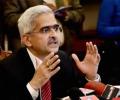
Following are the highlights of the RBI's first monetary policy statement of 2022-23 unveiled by Governor Shaktikanta Das: Policy repo rate unchanged at 4%; marginal standing facility rate & bank rate too remain unchanged at 4.25%. Monetary stance to be accommodative with focus on withdrawal of accommodation to keep inflation within target. GDP growth projection for FY'23 slashed to 7.2% from 7.8%; growth projections based on assumption of crude oil (Indian basket) price at $100 a barrel during FY'23. Inflation forecast hiked to 5.7% for FY'23 from 4.5%.

The Reserve Bank may cut key interest rates as early as this week.
The declining inflation and a negative industrial outlook have strengthened the case for RBI.
Soon after RBI's decision, three banks namely Yes Bank, HDFC Bank and Union Bank reduced the benchmark prime lending rate by 50 basis point each. SBI had last month slashed benchmark prime lending rate by 75 basis points to 13 per cent.

All six members of the Reserve Bank of India's (RBI's) monetary policy committee (MPC) expressed caution over food inflation during the December review, while two external members warned about high real interest rates as headline inflation approaches its target of 4 per cent. The central bank continued to maintain the status quo on both the repo rate and the stance in the December monetary policy. India's retail inflation in November rose to 5.5 per cent - its fastest pace in three months - due to higher food prices.
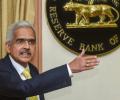
In the second policy review under Governor Shaktikanta Das, the six-member Monetary Policy Committee voted 4:2 in favour of the rate cut.

The Reserve Bank of India's rate-setting panel on Wednesday started discussions to firm up the next bi-monthly monetary policy amid expectations that it might retain status quo on interest rate but change its monetary policy stance amid rising inflation on account of geopolitical developments.

Banks led the decline with Nifty Bank and BSE Bank index dropping over 3% each.

Analysts are divided on their retail price inflation forecast, with some saying the first quarter numbers will overshoot the RBI target by as much as 60 bps while others are softer in their estimate. Consumer price inflation retreated from its 15-month peak of 7.4 per cent in July to 6.8 per cent in August, much lower than the market expectations, despite vegetable prices remaining elevated at 26.1 per cent. Food inflation eased to 9.9 per cent from 11.5 per cent, led by some cooling of inflation in vegetables, cereals, pulses and milk.

The RBI is expected to cut rates in next policy.

The nation's largest lender State Bank of India today said it will not hike its lending rates immediately but will wait for further signals from the Reserve Bank's forthcoming annual monetary policy.
RBI may wait for a substantial downtrend and maintain repo at the current level in its third-quarter review.

The minutes of the December MPC meet reveal members felt the current spike in the headline inflation rate was due to a temporary supply shock on the food front, expected to moderate by the second quarter of 2020-21.

The government on Friday raised interest rates on most post office saving schemes by up to 0.7 per cent for the April-June 2023 quarter in line with the firming of interest rates in the economy. While the interest rates for popular PPF and savings deposits have been retained at 7.1 per cent and 4 per cent, respectively, there has been an increase between 0.1 per cent and 0.7 per cent in other saving schemes, a finance ministry statement said. The highest increase was in the interest rate of the National Savings Certificate (NSC), which will now attract 7.7 per cent, up from 7 per cent, for the April 1 to June 30, 2023 period.
Headed by Urjit Patel, MPC for the fourth straight time kept the repo rate unchanged, at which it lends to the banks, at 6.25 per cent. The reverse repo, at which RBI borrows, will be 6 per cent.

Terming the RBI action on Wednesday as a "pleasant surprise", analysts today cautioned that possibility of a rate hike in the future cannot be ruled out. Urijit Patel committee's report on monetary policy would clear the air on RBI's future stand, they added.
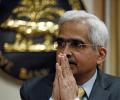
'Three external members of the first MPC are respected researchers with excellent academic background, but there is no harm in considering academicians with diverse backgrounds such as finance and labour along with economists for this body,' recommends Tamal Bandyopadhyay.

The repo or short term lending rate remains unchanged at 6.75 per cent and the reverse repo rate at 7.75 per cent.

Since January this year, RBI has cut the repo rate - at which it lends to commercial banks -- to a gross of 1.25 per cent.

Retail inflation dropped marginally to 7.01 per cent in June mainly due to slight easing in prices of vegetables and pulses, though it still remained above the Reserve Bank's comfort level for the sixth month in a row. The consumer price index (CPI) based inflation stood at 7.04 per cent in the preceding month of May and 6.26 per cent in June 2021. Inflation in the food basket in June 2022 was 7.75 per cent, compared to 7.97 per cent in the previous month, as per the National Statistical Office (NSO) data released on Tuesday.
The Reserve Bank of India is likely to cut policy rates by 0.25 per cent and keep the cash reserve ratio unchanged at its policy review next week, on the back of slower-than-expected growth and more encouraging inflation readings, says a report by HSBC.
The reverse repo ceiling was imposed in March when liquidity in the banking system was tight and the overnight call rate had touched a peak of 80 per cent.
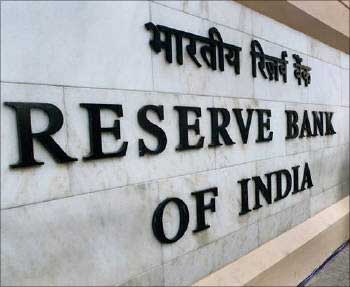
In policy review meet in June, RBI Governor Raghuram Rajan kept interest rates intact.

The new rates vary from 8.80 to 9.05 per cent on various slabs of loans.

If banks have a surplus, they have the option of parking the money with the RBI.
ICICI Bank, the second-largest private sector lender and state-owned Indian Bank on Monday raised their lending rates across all tenors in anticipation of a rate hike by the RBI later this week. The rates have been increased across all tenors under the marginal cost of funds-based lending rate (MCLR) system, a move that will make EMIs expensive for those who availed loans benchmarked against the MCLR. Under the revised rates, effective August 1, ICICI Bank's one-year MCLR has increased by 15 basis points or 0.15 per cent to 7.90 per cent, while the overnight MCLR rose to 7.65 per cent, as per information posted on the bank's website.

The central bank raised statutory liquidity ratio, the portion of deposits that banks are required to keep in government securities, by 100 basis points to 25 per cent. Other key rates were unchanged.
Realty firms and consultants hoped however that this would be the last round of monetary tightening by the central bank.

Analysts have started talking about at least a 25 bps cut immediately.

RBI unsure whether to cut rates or not in its next monetary policy.

Housing sales are likely to be hit, especially in affordable and mid-income categories, following the RBI's decision to hike repo rate, according to real estate developers and consultants. However, the impact of RBI's decision to raise the benchmark lending rate by 50 basis points to 5.40 per cent is expected to be for a short term, they added. This is the third consecutive rate hike after a 40 basis points and 50 basis points increase in May and June, respectively.
